Strong Opinions, Weakly Held
From bootstrapped beginnings to an exit.
Khurram Virani did not walk into the Althra office and tell a clean founder story.
He could have.
Two exits. More than 20 years in tech. Fifteen years as an entrepreneur. Functional Imperative. Lighthouse Labs. A company that grew into a meaningful part of the Canadian tech ecosystem and helped shape a generation of developers.
It could have been just about the wins. Instead, he let everyone see behind the scenes.
The messy part. The timing part. The part where a founder can be right, then the market changes, then the same founder has to decide what they are still right about.
That is where the session started to matter.
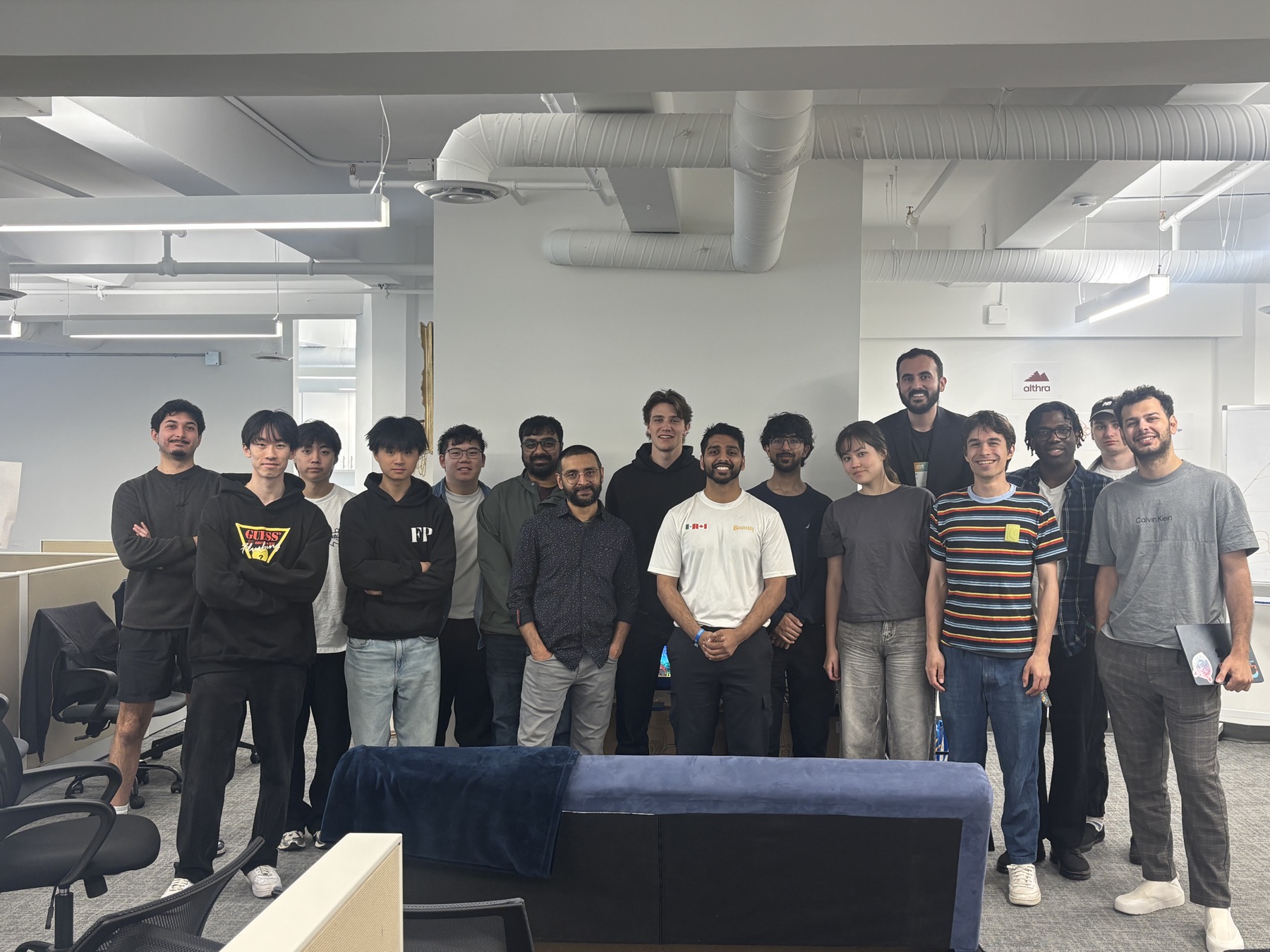
Khurram Virani with founders at the Althra office.
The Company Was Hidden Inside The Problem
Before Lighthouse Labs, there was Functional Imperative.
It was a dev agency with a practical problem. The junior developers they were hiring were not ready for the work.
So they built training.
Not because they were trying to start an education company. Not because they had a perfect thesis on the future of coding bootcamps. They needed better people for the work in front of them, so they built an onboarding system that actually helped people get there.
That internal curriculum became Lighthouse Labs.
At first, it was easy to see it as an operational fix. A way to make the agency better. But the more the market responded, the more obvious the deeper pull became.
Companies needed technical talent. People wanted a real path into the industry. The old way was too slow for both sides.
What this really means is that some of the best companies do not begin as companies. They begin as a sharp response to a real constraint.
The founder’s job is to notice when the response is bigger than the original problem.

A look inside the kind of hands-on learning environment Lighthouse Labs helped popularize.
Tailwinds Can Make Everyone Look Like Genius
In the early days, Lighthouse Labs spent very little on marketing.
That detail stayed with me.
When a market wants what you are building, it can feel like everything is working because of execution. Customers are already searching. Partners understand the story. The product makes sense before you have to over-explain it.
That is a gift. It is also dangerous if you never separate the work from the wind behind it.
Lighthouse Labs had real execution. It also had real timing. Coding bootcamps made sense in the pre-AI 2013-2019 era. Companies were hiring. People believed a clear promise: learn to code, get a job, change your life.
For a long time, that story worked.
Then the environment changed.
AI started compressing the entry-level developer path. Major tech layoffs changed hiring behavior. The coding bootcamp narrative weakened.
You can have the team. You can have the brand. You can have the operating muscle.
And still the old story can stop working. That is a hard lesson for founders because it forces a more honest question.
Was the company winning because the thesis was right, or because the market made it right for a period of time?
And more importantly, can founders adjust when the market shifts?
Find Your Signature Moment
Another line that stayed with the room was:
Find your signature moment.
For Lighthouse Labs, an early public coding event (HTML500), it was not just an event. It was leverage. A public-facing moment that gave the market a simple way to understand the company and gave the brand a reason to travel.

The kind of public-facing moment that helped the story travel beyond the classroom.
That matters more than founders sometimes want to admit.
Brand is not always something you build after the business is working. Sometimes brand is one of the reasons the business starts working.
Every company needs some version of that. Not a gimmick. Not attention for its own sake. A moment that compresses the story and makes the market pay attention for the right reason.
Write The Hard Agreements Early
Khurram also talked about co-founding with unusual honesty.
Six founders. Unequal equity. Real consequences.
He described it like marriage, which felt accurate because the point was not romance. It was commitment, stress, shared decisions, and the quiet cost of avoiding hard conversations.
The lesson was simple: Write the “what ifs” down before you need them.
It is easy to avoid those conversations early. The company is fragile. Everyone wants to keep momentum. Nobody wants to make things awkward before there is even much to protect.
But ambiguity compounds.
If the company works, the stakes get bigger. If the company struggles, the stress gets sharper.
Either way, the unclear thing eventually asks to be paid for.
You Do Not Fully Exit When You Exit
Lighthouse Labs sold, and the deal looked clean from the outside. Most of the original founders moved on. One stayed closer to the business. Later, the acquirer ran into trouble and Lighthouse ceased operations.
The lesson on the slide was quiet:
From the outside, an exit can look clean. A finish line. A neat ending. A number people can understand.
Inside the room, it sounded more human than that.
An exit can end one chapter legally and financially. It does not always end the responsibility, the grief, the identity, or the relationship to what was built.
Founders do not just sell cap tables.
They sell something that held years of their life.
The Takeaway
The takeaway for the Althra founders was not to copy the Lighthouse Labs playbook.
It is to build with enough conviction to change the world, but with enough humility to change their approach.
Have the thesis. Find the leverage moment. Write the hard founder agreements before they become emotional. Know whether your market can support the outcome you are chasing.
And when the evidence changes, do not confuse loyalty to the mission with loyalty to the old version of the plan. Maybe momentum is not just about moving fast.
Maybe it is about knowing when the wind has changed.